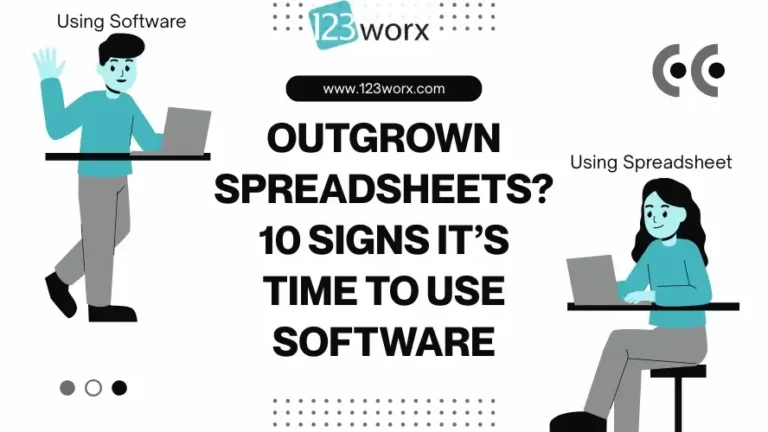
Even in 2026, many construction companies still rely on spreadsheets like Excel or Google Sheets to manage schedules, costs, materials, and project updates. There are project schedules, project costs, tracking of materials, project contact information, and project status reporting.
However, concurrently, the type of software used in the construction industry has also undergone tremendous changes. Current platforms provide real-time visibility and predictive analytics capabilities that spreadsheets were never designed for.
What, then, is behind this ongoing debate?
Spreadsheets are intuitive, flexible, and affordable, particularly for small construction companies. However, familiarity doesn’t necessarily mean it’s suitable, especially when dealing with increasingly complex tasks and tighter profit margins.
Quick Answer: Construction Software or Spreadsheets in 2026?
For most construction companies in 2026, construction management software is the better choice. While spreadsheets like Excel or Google Sheets may still work for very small teams or isolated tasks, they cannot support real-time collaboration, client visibility, change tracking, or predictive insights required in modern construction projects.
- Spreadsheets help track data.
- Construction software helps run projects.
This distinction is what matters most today.
Why Spreadsheets Became the Default Tool in Construction
Spreadsheets did not become popular in the construction industry because they were perfect. Spreadsheets became popular because they were available.
For several years, construction personnel utilized spreadsheet software to:
- Track budgets
- Create schedules
- Handle Material Lists
- Monitor Progress
- Share updates internally
Spreadsheets are flexible. Any person could make one. They did not need training either. To small-scale teams that had one or two projects, this system seemed adequate.
At first, spreadsheets can really work, which explains why many construction companies slowly, but not abruptly, outgrow them.
Where Spreadsheets Start to Break Down in Construction Projects
Spreadsheets fail in construction not because they are bad tools, but because construction projects move faster than spreadsheets can keep up.
Once multiple people are involved, version confusion starts. Once work moves to the field, updates lag behind reality. And once costs or schedules change, every related file must be updated manually.
In 2026, this manual dependency becomes a liability, not just an inconvenience.
What Construction Software Was Built to Solve
Construction software exists because the construction industry is dynamic, interconnected, and risk-driven.
Unlike spreadsheets, construction management software has these purposes:
- Keep information up to date, real-time
- Automatically link schedules, budgets, and tasks
- Establish accountability through ownership and record-keeping
- Centralize documents and communication
- Reflect dependencies between activities
Rather than analyzing data in an isolated manner, construction management software considers a project as a living system.
When a change is triggered, such as a schedule adjustment, cost update, or scope change, the system updates automatically.
Comparison Between Construction Software and Spreadsheets
Instead, comparisons are better made based on their outcomes.
Visibility and Awareness
Spreadsheets are static views. Construction software is a live project performance. In 2026, decision-makers require instant visibility, not weekly reports.
Collaboration and Accountability
Spreadsheets are based on collaboration. Construction software is enforcing structure. Tasks, Approvals, and Updates are tracked by user, time, and context.
Risk Management
Spreadsheets keep risks undercover until they become apparent. Construction project management tools reveal risks early on, pointing out delays, spending trends, and chokepoints.
Scalability
Spreadsheets are more challenging as the projects grow. There is construction software that is capable of handling projects, teams, as well as regions.
Instead of comparing tools, it’s more useful to compare outcomes.
| Area | Spreadsheets | Construction Software |
| Real-time updates | Manual, delayed | Automatic, live |
| Collaboration | Version conflicts | Centralized & tracked |
| Client visibility | Not client-friendly | Built-in client portals |
| Change orders | Manual recalculation | Auto-linked to cost & schedule |
| Risk detection | Reactive | Predictive |
| Scalability | Breaks as volume grows | Designed to scale |
| AI readiness | Not supported | AI-enabled insights |
When Spreadsheets Still Make Sense (And When They Don’t)
To be fair, spreadsheets have not become redundant. Spreadsheets can still be useful in the following situations:
- A business has very few projects.
- Teams are extremely small
- Data does not change very often
- Risk tolerance is high
However, spreadsheets stop making sense when:
- Multiple projects are running simultaneously
- Both field and office staff must be aligned
- Clients expect transparency
- Expenses need to be strictly regulated
- Growth is an aim for businesses
By 2026, most construction companies will already be functioning far beyond where spreadsheets are viable, even if they haven’t acknowledged this yet.
Who Should Use Spreadsheets and Who Should Use Construction Software
Spreadsheets still make sense if:
- You manage one or two small projects
- Changes are rare
- There are no client reporting requirements
- Growth is not a priority
Construction software is the better choice if:
- You manage multiple projects at once
- Field and office teams must stay aligned
- Clients expect visibility and fast approvals
- Cost overruns must be controlled
- You plan to scale operations
Your communication and team management become easier when you have a good client communication software for construction teams.
The Hidden Cost of “Free” Spreadsheets
One of the most frequently voiced justifications for using spreadsheets is cost. They are apparently free.
In reality, there are unseen operational costs associated with using spreadsheets:
- Time spent on updating and reconciling data
- Mistakes arising from out-of-date information
- Revise because of Miscommunication
- Stress and Decision Fatigue
- Missed opportunities owing to delayed insight
These are not shown on the invoice but are revealed through margins, timelines, or the morale of the team.
Construction software, when properly selected, usually pays off by itself, not only by automating tasks, but by eliminating chaos.
What is Driving Modern Construction Teams to Abandon Spreadsheets
The one thing successful project teams in 2026 share in common. They value clarity and control over familiarity.
They point out that spreadsheets may look familiar, but they’re not suited to support contemporary building realities because:
- Remote employees
- Remote Access Requirements
- Client visibility expectations
- Regulatory and documentation requirements
Construction software is more in tune with what is actually going on in projects. It doesn’t replace thinking. It facilitates enhanced thinking.
Why AI Works With Construction Software – Not Spreadsheets
Artificial intelligence depends on structured, connected, and historical data. Spreadsheets store information, but they do not understand relationships between tasks, costs, schedules, and risks.
Construction software enables AI to:
- Detect schedule slippage early
- Identify cost overruns before they escalate
- Forecast completion timelines more accurately
- Surface risks automatically instead of manually
In 2026, AI-driven insights and construction productivity studies are becoming standard in construction operations. Spreadsheets simply cannot support this shift.
Where All-in-One Construction Platforms Fit In
Instead, today’s all-in-one construction software systems are designed to consolidate a multitude of spreadsheets into a single system that integrates scheduling, budgeting, documents, and communication.
For example, solutions like 123worx are designed for contractors, remodelers, and builders who need structure without unnecessary complexity. They integrate management, communication with clients, estimating, and approval into one system. This allows for reduced manual tasks without sacrificing speed.
How to Know It’s Time to Move Beyond Spreadsheets
Most construction companies do not quit using spreadsheets after one big failure; it is because they are experiencing cumulative friction.
Common warning signs include:
- Frequent surprises late in the project
- Conflicting reports from different team members
- Too much of “figuring out where things stand.”
- Frustration with manual updates is increasing
- Scalability of Operations
It is when these signs emerge regularly that spreadsheets go from being a tool to becoming a bottleneck and a clear signal it’s time to move beyond spreadsheets.
Frequently Asked Questions
Is Excel still used in construction in 2026?
Yes, but mainly for simple tracking tasks. Most growing construction companies now rely on construction software for full project management.
Can small contractors benefit from construction software?
Yes. Even small teams benefit from better visibility, faster approvals, and reduced admin work.
Is construction software more expensive than spreadsheets?
While spreadsheets appear free, construction software often saves money by preventing errors, delays, and rework.
Final Verdict: Construction Software vs Spreadsheets in 2026
In 2026, the question is no longer whether spreadsheets can be used in construction — it is whether they should be.
Spreadsheets may still serve small, isolated tasks. But for construction companies focused on predictability, profitability, and professionalism, they are no longer sufficient.
Construction software provides:
- Real-time visibility across projects
- Fewer surprises and delays
- Better cost control
- Stronger collaboration
- A foundation for AI-driven decision-making
That is why modern construction teams are moving beyond spreadsheets. It’s not because spreadsheets failed, but because the industry evolved.

As a Vice President at 123worx, Construction Management Platform, Bharat Rudra has worked with hundreds of business executives searching for best-suited software for their construction business with a wide array of requirements. Bharat takes pride in helping construction businesses solve their business and project management challenges. Feel free to reach Bharat if you have any questions. You can find him on LinkedIn or reach him at brudra@123worx.com