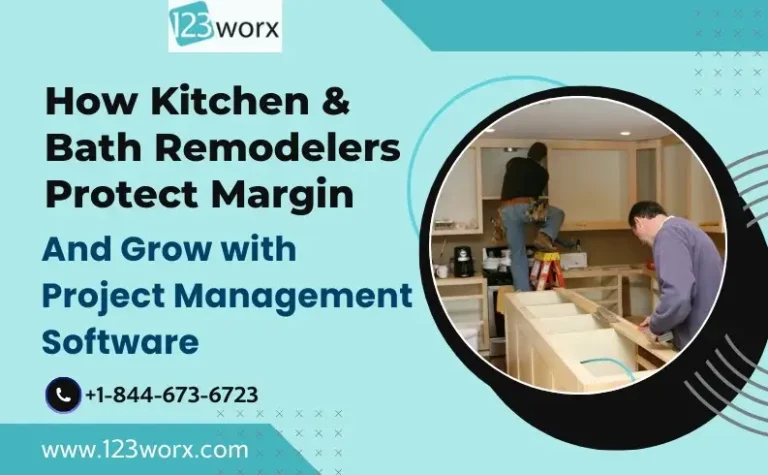
Remodeling of kitchens or bathrooms is one of the most challenging activities in residential construction projects. These areas require high usage, client attachment, technical density, and physical constraint in a limited space.
Unlike other remodeling projects, where timing is everything, but not always, remodeling projects such as those for the kitchen and bath require near-perfect sequencing. These projects have many interconnected elements, including electrical, plumbing, finishes, and inspections.
This is the reason why it’s not optional to have a defined workflow in place. The defined workflow helps in maintaining timelines, profit margins, and building trust with clients who expect it throughout the process.
In this article, we will take you through the entire process of a complete remodel of a kitchen and/or bath, from initial client inquiry to handover, with a focus on how it’s done in real life, not in theory.
Why Kitchen & Bath Remodeling Workflows Are Different?
There is a different operational approach required in remodeling a kitchen or bath than is required in most other forms of construction work.
Firstly, client involvement is much higher. The clients are heavily involved in design decisions because these rooms are used on a daily basis. This creates frequent feedback cycles, driven by daily use, emotional investment, and personal preferences.
Secondly, design revisions are a regular occurrence. The size of cabinets, type of appliances, location of fixtures, and materials used are subject to revision as a design takes shape. Without a structured system, these revisions quickly create misalignment between design, budget, and construction.
Thirdly, it entails several trades working in a restricted space. It entails the electrical, plumbing, cabinet installation, tile setting, and finish trades working sequentially and correctly to avoid reworking and downtime if they are not well coordinated.
Finally, there are the custom aspects of a kitchen and bathroom remodel, long-lead items, and permitting issues that are often layered and complicated. These are all riskier with a reactive approach to workflow management.
Quick Overview of The Complete Kitchen & Bath Remodeling Process
Before going into each of these phases in more detail, it is helpful to first understand how they all fit together in a nutshell. Kitchen or bath remodeling was described as a linear process. However, each stage of the process also deeply overlaps with every other stage. It is where steps are missed, or phases are skipped (or rushed through) that remodeling projects suffer the most.
This workflow reflects how successful remodelers manage real projects using a top project management software for kitchen and bath remodelers, not idealized timelines.
The complete kitchen and bath remodeling workflow typically follows these phases:
- Client inquiry, consultation, and initial scoping
- Design development, selections, and pre-construction planning
- Estimating, budgeting, and client approval
- Scheduling and trade coordination
- Demolition and structural preparation
- Rough-ins, installations, and inspections
- Finishes, punch lists, and quality control
- Project closeout and client handover
- Workflow documentation and continuous improvement
This structure provides a sense of predictability within a type of project that is normally filled with variables. There is a clear purpose within each phase, a clear output, and a clear “handoff” point.
Phase 1 – Client Inquiry, Consultation & Initial Scope
The workflow starts even before the design process starts. This process lays down groundwork, filters projects, and eliminates unnecessary friction in subsequent workflow stages.
Industry best practices published by professional trade associations reinforce the importance of structured workflows in residential remodeling.
Lead Intake & Client Qualification
An initial conversation is key in determining if the project can go forward. Remodelers should know upfront what is expected out of the project. Budget expectations, constraints, and decision-making authority are all details that need to be addressed.
Site Visit & Measurements
Collecting data about a site is critical. Measurements, existing conditions, structural limitations, utilities, and building codes are just some of the things that determine how a designer will approach the design. These are details that, if missed, can cause expensive re-designs or overruns down the road.
Defining the Initial Scope
Defining an initial scope creates boundaries by determining both project elements and excluded items, as well as recorded assumptions. This scope will be used as a baseline for all tasks moving forward. Estimating, scheduling, approvals, and future change orders all use the scope as a guide.
Many workflow issues later in the project can be traced back to this phase. Vague scope definitions and unverified assumptions almost always resurface as change orders or scheduling conflicts.
Phase 2 – Design, Selections & Pre-Construction Planning
This phase is crucial as it defines whether the project will proceed smoothly or face problems in the downstream process. Most downstream problems originate from unclear assumptions made during design and selection.
Design Development & Revisions
An efficient workflow enables creativity, yet also provides the necessary controls. Design iteration should also follow a specific order, which is approved, and the design changes are well recorded to avoid misalignment between the design, the client, and the construction team.
Material & Finish Selections
Remodeling the kitchen or bath area is a process that requires many selections to be made, which depend upon each other, like cabinetry, countertops, appliances, tiles, flooring, lighting, etc., which need to be properly tracked for the purpose of approvals, ordering, and timely deliveries.
Permit & Approval Planning
The permits and approvals need to be planned in conjunction with design work instead of waiting until after design work has been done. Electrical, plumbing, structural, and HOA approvals affect the scheduling and sequencing of work.
Local building codes and permit requirements can significantly impact remodeling timelines.
Phase 3 – Estimating, Budgeting & Client Approval
From the design definition, the workflow shifts into financial alignment.
Preparation of a Detailed Estimate
Detailed estimates have included cost estimates for labor costs, material costs, costs for hiring subcontractors, and costs of contingencies. Breaking up your costs into several categories is extremely beneficial. It creates transparency, allows for more accuracy, and leaves room for fewer disputes when the real construction work is.
Presenting Options & Upgrades
Experienced remodelers provide clients with tiered options rather than a specific price. The tiered options allow clients to make informed decisions while keeping budget control.
Final Client Sign-Off
The final scope, budget, communication, and change control must be approved before project construction. This step represents an important workflow milestone, protecting both remodelers and customers.
This phase protects profit margins by aligning expectations before construction begins.
Phase 4 – Scheduling & Trade Coordination
Scheduling in kitchen and bath remodeling is not about dates; it is about dependencies.
Creating a Remodel-Specific Schedule
Each phase depends on the previous phase: demo needs to be complete before rough-ins can happen, inspections drive the schedule, cabinet lead times drive the install dates, and appliance delivery drives finishing completion. These remodel-specific dependencies make the network schedule a better fit than traditional scheduling methods.
Coordinating Trades in Tight Spaces
As space is limited, trade overlaps should be managed. Clear start and stop windows help prevent congestion, rework, and downtime. Visibility of who is working where and when helps prevent unnecessary conflicts.
Managing Delays and Dependencies
Delays are a given, but the well-designed workflow will anticipate these, including the possibility of delayed materials, inspection schedules, and design changes. The objective is to make controlled adjustments in response to these, based upon established dependencies, rather than reacting to problems after they disrupt the project.
Scheduling is the backbone of a successful kitchen and bath remodeling workflow.
Phase 5 – Demolition & Structural Preparation
This phase involves the transition from designed plans to execution, during which discovery-related holdups most commonly occur.
Site Protection & Controlled Demolition
Demolition in occupied spaces must be careful and controlled. Protecting other areas from damage, minimizing dust and noise, and ensuring safety all go hand in hand with earning your clients’ confidence and avoiding collateral damage.
Structural Adjustments & Layout Preparation
The structural changes could be the removal of walls, modification of framing, etc., and these changes must be perfectly matched with the approved plans to avoid rework and inspection failure.
Managing Hidden Conditions & Discoveries
Demolition is the riskiest discovery phase. Water damage, outdated wiring, or substandard plumbing, for example, require predefined workflow actions.
What Commonly Goes Wrong Without a Defined Workflow
Without a documented workflow, kitchen and bath remodelers often experience:
- Trades arriving too early or too late
- Inspections are delaying downstream work
- Cabinets delivered with no place to store them
- Client changes are not reflected in the schedules
- Crews working from outdated information
These issues are rarely caused by a lack of skill. They are almost always workflow failures.
Phase 6 – Rough-Ins, Installations & Inspections
During this stage, the underlying support structure for how the remodel will function is created. This is where many decisions are “locked in”.
Electrical & Plumbing Rough-Ins
The “rough-ins” must match exactly the approved plans. Inaccurate “rough-ins” can mean costly changes down the line.
Inspection Coordination & Approval Gates
These inspections should be considered as a form of a gate in a workflow. Work should never proceed before approvals are documented.
Cabinetry & Fixture Installations
The cabinet installation is typically a milestone, and the delivery/storage/handling of the cabinet can create downstream delays.
Phase 7 – Finishes, Punch List, & Quality Control
This is where the client’s final perception of the project is established.
Finish Installation and Craftsmanship Review
Tile work, paint, fixtures, and hardware all require accuracy. Imperfections stand out like a sore thumb in kitchens and baths. They need to be corrected immediately.
On-Going Quality Control
Rather than waiting until the end, quality control should be practiced throughout the installation of the finish work. This will help prevent a buildup of problems.
Punch List Creation & Resolution
Punch lists must be specific, assigned, and verified. They can be structured to ensure quality and profitability.
Phase 8 – Project Closeout & Client Handover
Closeout formalizes completion and influences long-term client sentiment.
Final Inspections & Compliance Verification
All inspections need to be completed before handing over to avoid any liability.
Documentation, Warranties & Client Education
The clients need to be informed about the warranty, the appliances provided, and the maintenance requirements.
Final Sign-Off & Payment Closure
Sign-off, including clean sign-off and payment closure, enhances professionalism, removing friction from a project’s close.
Phase 9 – Workflow Documentation & Continuous Improvement
This phase converts experience into scalable knowledge.
Post-Project Review & Analysis
Teams should evaluate schedule accuracy, budget performance, and issues related to coordination after closeout.
Knowledge Capture & Process Refinement
Lessons learned and documented have been shown to enhance the accuracy of estimates, realism in scheduling, and future execution.
Scaling Through Standardized Workflows
Consistent documentation also reduces reliance on tribal knowledge, which is beneficial for sustainable growth.
Common Workflow Mistakes Kitchen & Bath Remodelers Make
Most kitchen and bath workflow problems are predictable and avoidable.
One of the biggest mistakes that can occur is thinking that schedules are static. When working with kitchen and bath projects, schedules need to be dynamic.
Another common problem is unmanaged change. Design changes are the norm in the construction industry. However, unmanaged changes eat into the bottom line.
Poor documentation is also a big problem. Verbal agreements, scattered emails, and notes provide little security if a problem occurs.
Lastly, remodelers tend to grossly underestimate trade coordination. In tight spaces, any miscalculation in scheduling can lead to congestion.
These issues rarely come from a lack of craftsmanship. They come from a lack of structure.
How Software Supports a Clean Remodeling Workflow?
Software doesn’t replace experience; it reinforces a well-defined workflow.
In remodeling kitchens and baths, the biggest value of the software is the visibility provided, particularly through a centralized system to make all the design, selection, schedules, and changes accessible to all the people involved.
When workflows are supported by software:
- Communication is consolidated
- Schedules are a reflection of real dependencies
- Changes are documented and approved
- Documentation is maintained through closeout
It is all about alignment. Software is most effective when it is aligned with an easily understood process. This is why, at 123worx, teams begin with process clarity, then move on to supporting technologies.
For kitchen and bath remodelers, software is most effective when it supports clear phases, documented changes, scheduling dependencies, and centralized communication.
Final Thoughts: Workflow as a Competitive Advantage
Remodeling your kitchen or bathroom will never be easy. The process is personal, intimate, and technically complicated. Complexity doesn’t have to result in chaos.
A well-defined workflow allows us to turn complexity into manageability. It brings teams into line, manages client expectations, and provides a repeatable pattern for moving from initial contact to delivery.
Ultimately, this predictability becomes a form of competitive advantage that is hard for others to duplicate. Remodelers who focus on workflow discipline aren’t only delivering better projects; they’re creating better businesses as well.
For remodelers who want consistency, profitability, and client trust, a disciplined workflow is no longer optional as it’s a competitive advantage.

As a Vice President at 123worx, Construction Management Platform, Bharat Rudra has worked with hundreds of business executives searching for best-suited software for their construction business with a wide array of requirements. Bharat takes pride in helping construction businesses solve their business and project management challenges. Feel free to reach Bharat if you have any questions. You can find him on LinkedIn or reach him at brudra@123worx.com